


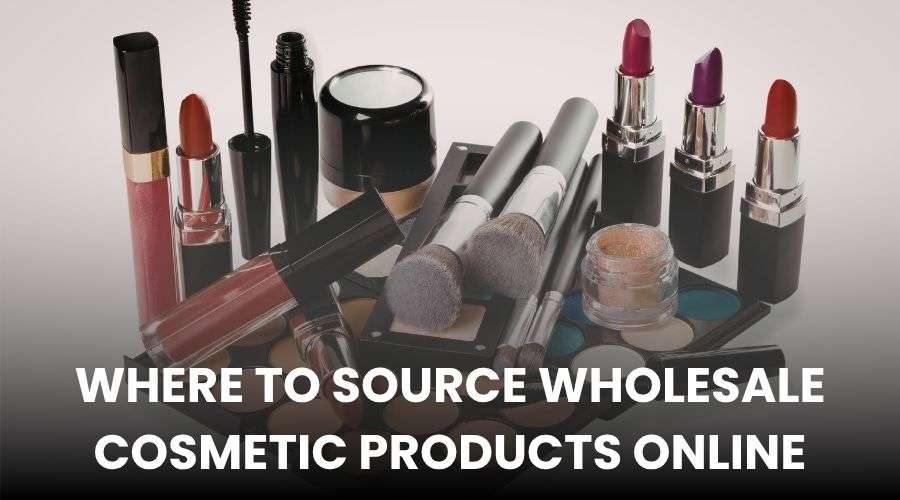
Where to Source Wholesale Cosmetic Products Online
The cosmetics industry moves fast. Consumer preferences shift with seasons, trends emerge overnight, and the brands that consistently win shelf space, physical or digital, are not simply the ones with the best formulas. They are the ones with the most disciplined, intelligence-driven sourcing operations behind them.
Sourcing wholesale cosmetic products online is, on the surface, straightforward. Platforms are abundant. Suppliers are eager. The internet has, at least in theory, democratized access to global manufacturing. But that accessibility cuts both ways. The same openness that connects a startup beauty brand to a Guangzhou manufacturer also exposes every buyer to inconsistent quality, opaque production standards, regulatory landmines, and suppliers who present polished catalogs while delivering something else entirely.
This blog is written for businesses that are serious about their supply chain: retailers, distributors, e-commerce brands, and beauty service providers who need wholesale cosmetic products that meet real market demands and stand up to scrutiny. The goal is not simply to help you find a source. It is to help you build a sourcing practice that becomes a genuine competitive advantage: one grounded in expertise, executed with authority, and maintained with unwavering trustworthiness at every link in the chain.
Setting Non-Negotiable Specifications for Bulk Orders
When you are ordering cosmetics at wholesale volume, the specification document is not a formality but the only way to ensure quality control.
Material Quality and Product Integrity
The cosmetics industry faces a level of scrutiny that few product categories match. Regulatory controls and standards are quite unforgiving, and the reason is justified, after all consumers apply these products to their skin. Cosmetic products have to undergo multiple levels of inspections from regulatory bodies that test them, to dermatologists and professional practitioners who evaluate them. This means material quality is not a preference but a baseline requirement.
For bulk procurement specifically, consistency of finish and a uniform formulation across multiple production runs are crucial. A foundation shade that varies between batches is not simply a quality issue; it reflects negatively on the brand's reputation and image. That is why businesses procuring these products must give detailed specifications that include acceptable tolerance ranges for color, viscosity, pH, texture, and shelf stability. Any suppliers that fail to meet these expectations must be crossed off the list.
Functionality and User Convenience
In cosmetics, user experience is product performance. That encompasses different aspects of user interaction like application ease, tactile quality, dispenser reliability, and packaging ergonomics. Together, these shape how customers perceive the product itself. Overlooking these during bulk procurement is a mistake many beginners make. These are not secondary concerns. When writing specifications for wholesale cosmetic procurement, the physical interaction between the product and the end user deserves the same deliberate attention as the formula.
Choosing the Right Sourcing Model
There is no universally correct model for wholesale cosmetics sourcing. There is only one model that correctly fits your business's current stage and brand objectives.
Wholesale Procurement
For businesses just starting out in the cosmetics niche, testing new product categories, or managing a lean operation are the core priorities. Here, choosing to go for a direct wholesale procurement is a rational choice. The advantages are multiple: faster market entry, lower minimum order quantities, and access to proven, market-tested products.
But this model is not without its limitations. One of them is when you stock the same wholesale lip gloss or face serum as dozens of other resellers, price becomes the primary competitive lever, and price competition at wholesale margins is a race most businesses find tough to win. Wholesale procurement works best as a strategic entry point or a category supplement, not a long-term differentiation strategy on its own.
Private Label Sourcing
Private label sourcing is a method through which many serious cosmetics businesses find it convenient to establish a solid foothold in the market. The model is straightforward and simple: a manufacturer produces an existing formulation, which the buying business brands, packages, and markets as its own. The result is a unique market identity built on a proven product formulation. That means brands that lack the financial means to develop their own formula are saved from the lengthy hassle of full custom development.
If you choose this strategy, it is crucial to understand trade-offs clearly. Private label typically requires higher minimum order quantities than generic wholesale, because production runs are configured specifically for your brand. Additionally, all packaging specifications and designs are to be supplied by the brand only. These are manageable constraints, but they require operational readiness and cash flow planning that businesses should not underestimate.
What private label delivers in return is a product line that is innovative and unique, and that helps in establishing a brand identity in the competitive cosmetic industry. In the cosmetics market, where brand perception drives purchase decisions as powerfully as formulation quality, ownership is not a small benefit.
Where to Actually Find Wholesale Cosmetic Suppliers Online
The sourcing landscape for wholesale cosmetics spans domestic distributors, international manufacturers, and a growing ecosystem of B2B digital platforms. Understanding what each channel offers and what it costs you shapes a far smarter supplier discovery process.
Domestic Distributors
Domestic wholesale cosmetics distributors offer a set of advantages that are underestimated by businesses focused on competing for the lowest unit price. These advantages range from faster turnaround times, simpler communication, and no unnecessary confusion about shipping time zones. Procurement through domestic distributors also means lower minimum order quantities.
Overseas Manufacturers
Overseas manufacturers prove to be a good fit for established cosmetics businesses that have consistent volume requirements and defined product specifications. In this arena, international manufacturers like C-Square Hub from China, or Limkus Beauty from South Korea, are some noteworthy names that offer rates that are really favorable and lucrative. Lower unit costs at scale, greater production capacity, and substantially more flexibility for custom formulation or packaging development are the core advantages.
But finding a good international manufacturer can prove to be challenging and complex. Many hurdles like regulatory compliance differences, longer lead times, language barriers, import logistics, customs duty considerations, stand in the way. And to tackle these requires structured management on the part of the cosmetic brand or seller. Businesses that succeed with overseas cosmetics manufacturing do so because they invest in the relationship. transaction. They visit factories, conduct pre-shipment inspections, and build a supplier relationship grounded in mutual accountability.
B2B Platforms
Online B2B platforms have drastically changed the cosmetics sourcing landscape. Platforms such as Alibaba, Global Sources, Faire, and niche industry-specific directories allow buyers to browse supplier catalogs, compare product ranges, and review certifications with a click of a button. All this has accelerated the sourcing phase. What would have required an international sourcing trip a decade ago can be done in minutes.
Used intelligently, these platforms are powerful discovery tools. Used naively, they are a shortcut to disappointing sourcing decisions. A polished supplier page is not a vetting process. Certification claims require verification. Reviews and ratings inform but do not replace direct due diligence.
Vetting Suppliers Before You Commit a Single Dollar
Supplier discovery and supplier selection are not the same thing. The gap between them is where sourcing decisions go wrong.
Know What You Are Buying From
The distinction between a direct manufacturer and a trading company is one of the most important to know during procurement. A direct manufacturer controls its formulation, production line, raw material sourcing, and quality systems. A trading company is a middleman buying from manufacturers and reselling to buyers. Neither arrangement is inherently wrong, but overlooking the difference between the two can affect nearly everything from pricing to customization flexibility and even quality control transparency.
The best approach is to ask directly. Request facility documentation. If a supplier claims to manufacture but hesitates to share production facility evidence or allow any form of factory verification, then that hesitation is a red flag. In a category as sensitive as cosmetics, knowing exactly who is making your product is not optional.
Quality Control and Manufacturing Standards
In cosmetics manufacturing, quality control is not a final inspection step. It is a system that runs from raw material sourcing through formulation, filling, packaging, and final release. Responsible suppliers can demonstrate this through multiple certifications and by producing adequate documentation, such as process quality checks, batch records, and testing results.
Your job is to request Certificates of Analysis for product batches. Ask about ingredient sourcing transparency. Inquire specifically about how the supplier handles non-conforming materials or production deviations. The quality of these answers tells you almost everything you need to know about the reliability of the partnership.
Reliability: Communication, Timelines, and Transparency
Operational reliability is the dimension of supplier vetting that gets the least attention and causes the most problems. A manufacturer that delivers outstanding product but communicates erratically, misses quoted lead times without forewarning, or becomes evasive when production challenges arise is not a reliable supply chain partner, regardless of how good the product is.
Evaluate responsiveness from the first inquiry. Assess how clearly and completely questions are answered. Ask references about timeline adherence and how issues were handled when they arose. Reliable cosmetics suppliers understand that their buyers' businesses depend on predictable inventory flow, and they operate accordingly. The ones who do not will cost you more than the ones with a slightly higher unit price.
Conclusion
Wholesale cosmetics sourcing is not a one-time exercise. It is a practice, one that demands ongoing refinement, active relationship management, and an unrelenting commitment to quality that mirrors the standards your customers hold you to.
The businesses that navigate this space most successfully are the ones that treat sourcing as a strategic function, not a procurement task. The cosmetics industry rewards expertise and punishes shortcuts. A compromised formula, a non-compliant label, any of these can unwind customer trust that took years to build. The sourcing decisions made before a single unit reaches a shelf are the foundation of everything that comes after.
Featured Articles
If you want to offer something different from your competitors, you need to take some steps. Runn
READ FULLIf you want to offer something different from your competitors, you need to take some steps. Runn
READ FULL